

The Conversation My Parents Never Had — Talking About Money With Your Parents
It was late. Long past midnight. I was nine, maybe ten. I was supposed to be asleep. I had woken up to drink water, and on the way back to my room, I heard them.
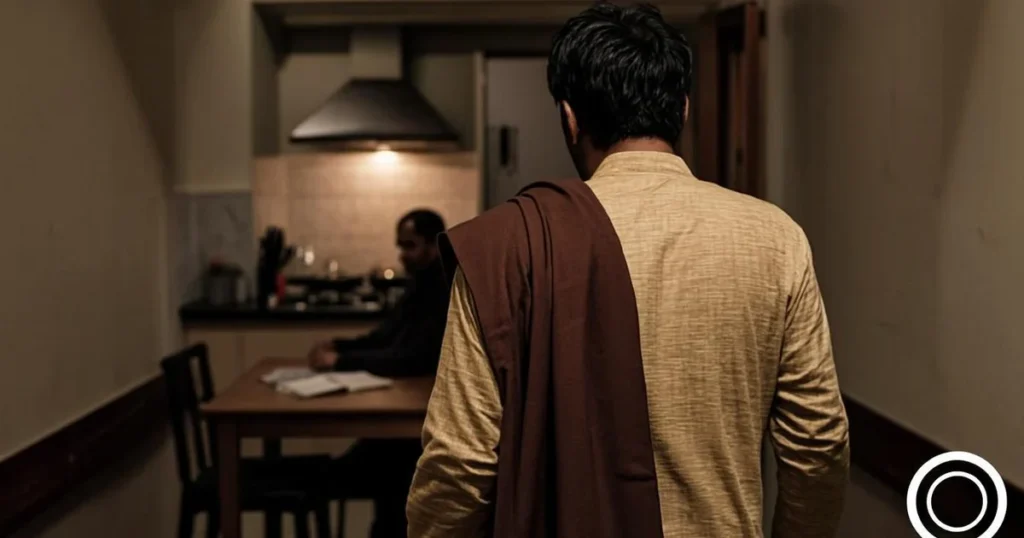
My parents were in the kitchen. The light was on, just the small one above the stove. They were not speaking loudly. That was how I knew something was wrong. When things were fine, they spoke in their normal voices, easy and warm. When things were hard, they went quiet. They spoke in half-sentences, the way you speak when you are afraid of waking the children. Which, of course, was exactly what they were doing.
I stood at the edge of the hallway. I did not move. I did not breathe.
I did not understand everything they said. But I understood enough.
There was a number. There was a date. There was the rent. There was my school fee. There was a decision that had to be made and no good way to make it.
Then my father said something I will never forget.
“We will figure it out.”
He said it softly. He said it the way you say a prayer you are not sure anyone is hearing.
My mother did not answer right away. I could see, in my mind, the look she must have given him. The look that was not disagreement. The look that was something harder. The look of a person who has heard “we will figure it out” too many times, and who is no longer sure that figuring out is possible.
I went back to bed. I did not drink the water. I forgot I was thirsty.
I never told them I had heard.
And they never told me what they had figured out, or how, or at what cost. The conversation, in our house, ended there. As far as the children knew, the kitchen light went off, and the next morning was a normal morning.
This is the article I wish someone had written for them.
I have spent the last fourteen years running a marketplace with one hundred and fifty shops. I have collected rent from shopkeepers. I have balanced their accounts. I have watched their businesses rise and fall. But the thing I have seen most clearly, in all those years, is something that does not appear in any ledger.
Money breaks people. Not always the way you think. Not by being absent. By being unsaid.
The shopkeeper who cannot tell his wife the rent is late. The wife who cannot tell her husband she took a small loan from her brother. The father who cannot tell his son why they moved to a smaller house. The son who cannot tell his father he lost the job.
Most of the financial pain I have seen, in my own life and in the lives of the people around me, did not come from being broke. It came from being silent about being broke.
This article is about that silence. About what it costs. And about how to begin, slowly, to break it.
Why Money Is the Last Great Taboo — The Cost of Financial Silence
Let me start with a piece of research that, the first time I read it, made me sit down.

In December 2018, Capital Group, one of the oldest and largest investment firms in the world, surveyed one thousand two hundred and two American adults. They asked a simple question. Which topics do you find too taboo to discuss?
The results were startling. Household earnings. Retirement savings. Debt. Inheritances. These four money topics ranked as more taboo than politics, religion, mental illness, drug addiction, race, sex, and marital problems 1.
Read that list again. People would rather talk about mental illness, drug addiction, and marital problems than talk about their own salary.
More recent data tells the same story. A 2023 Harris Poll conducted for Empower, summarized by Splitty, found that sixty-two percent of Americans do not talk about money at all. Seventy-five percent avoid the topic specifically with friends 2. A 2025 Bankrate survey found that more people feel uncomfortable talking about their bank accounts than about other controversial topics 3.
Money, in other words, has become the thing we cannot say out loud. The silence around it is so deep that we no longer notice it is silence. We just think of it as normal. We just think of it as the way things are.
But it is not the way things have to be. And the cost of the silence is much higher than most people realize.
What the Silence Costs

I want to put numbers on this. Because the silence is not free. It is paid for, every year, in marriages that end, in families that fracture, in friendships that quietly die, in children who grow up without words for the thing that shaped their childhoods.
Money Arguments Are the Top Predictor of Divorce
In 2013, a researcher named Sonya Britt, an assistant professor at Kansas State University, published a study in the academic journal Family Relations. She used longitudinal data, meaning data gathered from the same people over many years, from the National Survey of Families and Households. Her sample was over four thousand five hundred couples 4.
What she found changed how researchers think about marriage and money.
Arguments about money, she concluded, were the top predictor of divorce. Not children. Not sex. Not in-laws. Not religion. Money. For both men and women.
Here is the part that struck me most. Britt controlled for income, debt, and net worth. Which means the link between money arguments and divorce was not just about being poor. Couples with money still divorced over money arguments. Couples without money still divorced over money arguments. The variable was not the amount of money. The variable was the argument 4.
“Arguments about money is by far the top predictor of divorce. It’s not children, sex, in-laws or anything else. It’s money — for both men and women.” — Sonya Britt, Kansas State University
Other research backs this up. The American Psychological Association reported in 2015 that nearly one in three adults with partners, thirty-one percent, said money was a major source of conflict in their relationship 5. TD Bank’s 2019 Love and Money Survey found that forty percent of millennial couples argued about money at least once a week 6.
Forty percent. Every single week. Imagine a household where, every seven days, the same fight happens. The same words. The same hurts. The same silence afterward. Year after year. That is not a marriage. That is a slow erosion.
Financial Infidelity: The Quiet Lie — Hiding Money From Your Partner

There is a phrase for what happens when the silence turns into hiding. Researchers call it financial infidelity.
In 2021, the National Endowment for Financial Education, a nonprofit foundation, polled American adults about money and relationships. They found that forty-three percent of adults who had ever combined finances with a partner admitted to committing some form of financial deception 7. Hiding a purchase. Lying about income. Concealing debt. Keeping a secret account.
If your secret started with a purchase you did not plan, read why we buy things we don’t need. Understanding the want is the first step to stopping the lie.
If the secret you are hiding is credit card debt, the harder talk comes first. Read how to get out of credit card debt when you feel trapped before you bring it to the table.
Eighty-five percent of those who admitted it said the deception had affected their relationship 7.
Forty-three percent. Almost half. And that is just the people who admitted it. The real number is almost certainly higher.
I have watched this happen, in small ways, in our marketplace for years. The shopkeeper who keeps a separate envelope of cash his wife does not know about. The wife who borrows from her brother and tells her husband it was a gift. The son who hides a credit card statement from his father.
None of these people think of themselves as liars. They think of themselves as protectors. They are trying to protect their spouse from worry. They are trying to protect themselves from shame. They are trying to buy time, in the hope that the next month will be better and the secret can be quietly undone.
But secrets of that kind are not undone. They grow. The next month is not better. The secret becomes a larger secret. And eventually, the secret is found out, and the lie becomes larger than whatever it was hiding.
The hardest part is this. In almost every case I have seen, the original problem was small. A few hundred dollars. A single bad month. The kind of thing that, spoken aloud on a Sunday evening, could have been solved with a conversation and a plan. But because it was not spoken, it became a different kind of problem entirely. Not a money problem. A trust problem. And trust problems cost more than money problems ever do.
What Children Lose When We Stay Silent
I want to talk about the cost that breaks my heart the most. The cost to children.
When I was a child, I learned about money by watching. My parents loved me. They were trying to protect me. They thought they were doing the right thing by not speaking about money in front of me. They thought silence would keep me from worry.
What it did instead was keep me from words. I grew up feeling money. I did not grow up understanding it.
The Consumer Financial Protection Bureau, the same U.S. government agency I cited in the first article on this site, has done extensive research on this. Their program, called Money as You Grow, draws on findings published in a report titled Foundations of Financial Well-Being. The research is clear. Parents who talk to their children about money, even in small and imperfect ways, raise children who handle money better as adults 8.
The conversation does not need to be perfect. It does not need to involve spreadsheets. It needs to happen. Out loud. In the kitchen. In the car. At the grocery store. About why we are buying this and not that. About why we are saving. About why the answer to a request is sometimes no, and the reason for the no is not that we do not love the child.
The hardest sentence I have ever said to anyone, in my entire life, was to my own mother. I was grown by then. I had learned to talk about money, the hard way, by realizing how much not talking had cost us. I sat her down one evening, and I said, “I want to know about the money, Mom. The real money. Not the version you told us so we would not worry.”
She looked at me for a long moment. Then she began to cry. Not because I had asked. Because no one had ever asked before. Because she had been carrying it, alone, for thirty years.
We talked for three hours that night. It was the most important conversation of my life.
Three Conversations That Change Everything
I am not going to give you a script. Scripts fail the moment the other person does not say their line. What I am going to give you is something steadier. Three conversations. Each one with a different person. Each one harder than the last. Each one, if you can have it, capable of changing the rest of your financial life.
Conversation One: With Your Partner

This is the conversation most couples never have, or have only in the form of a fight. The fight is not the conversation. The fight is what happens when the conversation has been postponed too long.
Here is what I have learned, from years of watching couples, and from the research of the Gottman Institute, which has studied couples for decades. In ninety-four percent of arguments, the way the discussion begins is the way it ends 9. Read that again. Ninety-four percent. If you start the conversation harshly, with blame, with criticism, with anger, the conversation will end the same way it began. If you start it softly, with care, with a real question instead of an accusation, the conversation has a chance.
The Gottman Institute calls this the soft start-up. It is not a trick. It is a discipline. The discipline of beginning a hard conversation the way you would want it to end.
Here is how I would begin, if I were starting today.
Pick a time that is not during the fight. Not when the bill has just arrived. Not when the bank statement is open on the table. Pick a quiet evening. Sit somewhere you both like. Begin not with the numbers. Begin with the question.
You: “I want to talk about money. Not because something is wrong. Because I realized we have never really talked about it. And I do not want to wait until something goes wrong to start.”
You: “I am not bringing this up to blame you, or to be blamed. I am bringing it up because I love you, and I want us to be on the same side of this. Can we try?”
Then listen. Do not correct. Do not interrupt. Do not plan your next sentence while they are still speaking. Just listen.
Then, when they are done, tell the truth. The whole truth. The numbers. The fears. The thing you have been carrying that you have not said. The small thing, and the large thing. Tell it the way you would want to be told.
If one of you has already cut all you can and the bills still don’t balance, the next talk may be about earning more. Read how to earn extra money when you cannot spend any less.
If the conversation goes well, you will not solve everything that night. You will not need to. You will have done something more important than solving — you will have started. And starting, in my experience, is more than half the work. Once the silence is broken, the next conversation becomes the plan.
For the practical steps that turn that plan into action, read How to Stop Living Paycheck to Paycheck
Conversation Two: With Your Parents

This one is harder. Because by the time you are old enough to want to have it, your parents may have spent thirty years not having it.
I had this conversation with my mother. I described it above. It changed both of us. It did not give me money. It gave me something more valuable. It gave me the truth about where I came from. And the truth, even when it is hard, is always easier to live with than the silence.
Here is what I would say to you, if you are considering this conversation.
Do not begin with accusations. Do not begin with “Why did you never tell me?” Your parents were doing what they thought was right. They were trying to protect you. Begin with gratitude. Begin with love. Begin with the thing that is actually true.
You: “I love you. I have always loved you. And there is something I want to ask you, that I have been afraid to ask. I want to understand the money. Not because I want anything from you. Because I want to understand you. Will you tell me?”
Then be patient. They may cry. They may not want to talk. They may need time. Let them have it. Do not push. The fact that you asked is the conversation. Everything after that is a gift.
If you have aging parents, there is one more conversation hiding inside this one. It is the conversation about what happens to them, and to their money, if they become ill or pass away. I know. It is the hardest conversation of all. I also know, from watching too many families, that not having it is harder. Much harder. And much more expensive, in every sense of the word.
Conversation Three: With Your Children
This is the conversation I wish my parents had had with me. It is also the one I most want to give to my own children, when the time comes.
Children do not need to know everything. They do not need to know the rent figure. They do not need to know the credit card balance. They do not need to be afraid.
But they do need to know that money exists. That it is something we talk about. That decisions are made about it. That the answer to “can I have this” is sometimes no, and the no is not a rejection of them.
The CFPB’s Money as You Grow program gives research-based guidance for parents of children from age three through the teenage years [8]. The lessons are simple. Earn. Save. Spend. Share. Plan. The lessons are not difficult. The hard part is not the lessons. The hard part is the talking.
Here is a small way to begin. The next time you are at a store with your child, and they ask for something, do not just say yes or no. Explain the why. “That costs more than we planned to spend today.” “We are saving for something else this month.” “If we buy that, we will not have enough for the other thing we need.”
These are not lectures. These are seeds. Planted early, they grow into a child who, when they are older, will not need to learn about money the way I did. By counting coins alone, in the dark, afraid to ask.
When the Conversation Goes Wrong
I want to be honest with you, the way I have tried to be honest everywhere on this site.
Not every money conversation goes well. Some of them go badly. Some of them go so badly that you wish you had never started. I have seen this. I have been in this. I want to tell you what to do when it happens, because it will, at some point, happen.
When the Other Person Is Not Ready
Sometimes you will start the conversation, and the other person will not be ready. They will get defensive. They will shut down. They will change the subject. They will walk out of the room.
Here is what I have learned. Do not chase them. Do not push harder. Let them go. Try again in a week. Try again in a month. Some people need time to be ready, and time is something you cannot argue them out of.
But do not use their unreadiness as a reason to give up. Try again. The conversation you are trying to have is too important to abandon because the first attempt failed.
When the Conversation Becomes a Fight
Sometimes the conversation will turn into a fight. Money touches the most sensitive places in us. Our fears about the future. Our shame about the past. Our sense of who we are. When you touch those places, even gently, sometimes the reaction is loud.
If it becomes a fight, stop. Not forever. For now. Say something simple. “I do not want to fight. I want to understand. Can we try again another time?” Then leave it. Go for a walk. Sleep on it. Come back when the heat has gone.
Remember the Gottman finding. In ninety-four percent of arguments, the way the discussion starts is the way it ends [9]. If the start was harsh, the end will be harsh. The only way to change the end is to wait, and to start again, more softly, next time.
When You Are the One Who Cannot Speak
Sometimes the problem is not the other person. Sometimes it is you. Sometimes you are the one who cannot say the thing. The shame is too heavy. The fear is too loud. The words will not come out of your mouth, no matter how hard you try.
If that is you, here is what I would say. Write it down first. Sometimes the words that will not come out of the mouth will come out of the hand. Write the letter. Read it aloud to yourself, alone, until you can hear it without flinching. Then, when you are ready, give the letter to the person you love, and let them read it, and let the conversation begin from there.
Or, if even that is too much, talk to a professional. There is a growing field called financial therapy, which combines financial guidance with emotional and psychological support. A 2020 study by Ford and colleagues, published in academic literature, found that financial therapy approaches can help couples prepare for, and engage with, the emotional and relational aspects of money 10. Sometimes the conversation needs a third person in the room to begin. That is not weakness. That is wisdom.
A Small Way to Begin Tonight

I have given you research. I have given you numbers. I have given you three conversations. I want to close with something smaller. A single thing you can do, tonight, without preparation, without courage, without anyone else in the room.
Get a piece of paper. Write one sentence at the top.
The sentence is this. “The thing about money I have never said out loud is…”
Finish the sentence. Just for yourself. No one else has to see it.
If you can finish the sentence, you have already started the conversation. The first person you have to talk to, about money, is yourself. Most people never even get that far. They carry the unsaid thing for decades, and the unsaid thing grows heavier every year, until they cannot remember what it was originally about.
Write it down. Look at it. Sit with it. Then, when you are ready, ask yourself one question. Who, in my life, needs to hear this? Not the whole thing. Just a piece of it. Just enough to begin.
That is the conversation. That is the whole thing.
When the Conversation Is Not Safe to Have
I have to be honest about something, and I want to say it carefully.
Not every relationship is safe enough for honesty. Not every partner will receive the truth with care. Not every parent will respond with love. Not every family is capable of the conversation I am describing.
If you are in a relationship where speaking the truth about money will be met with violence, with punishment, with manipulation, or with retaliation, then this article is not for your situation. The conversation I am describing assumes a baseline of safety. If that baseline does not exist, the conversation is not the next step. Safety is the next step.
If you are in such a situation, please reach out to a qualified professional, a domestic violence hotline, or a trusted person who can help you think through your specific circumstances. The National Domestic Violence Hotline in the United States is one resource. There are equivalents in most countries. You do not have to figure this out alone.
I also want to say this. I am not a financial therapist, a marriage counselor, or a licensed mental health professional. I am a writer with a degree in Commerce and years of experience watching real money in real businesses. Everything in this article is shared for general information and education, not as personal advice. If you are about to make a major decision about money and a relationship, please speak with a qualified professional who can look at your specific situation.
Some conversations are too important, and too fragile, to have without help.
What My Father Could Not Say, and What I Learned to Say
I want to end where I began. In that kitchen. With that small light. With my father saying, “We will figure it out.”
I did not understand, when I was nine, what he was doing. I understand now.
He was talking to my mother. He was not talking to me. The children were not supposed to hear. The conversation was between them, and it was, by the standards of the world, a small one. A number. A date. A decision.
But it was a conversation. And the fact that they had it, even quietly, even imperfectly, even at midnight with the small stove light on, is part of why they made it through.
They did not have the words I am giving you in this article. They did not have the research. They did not have the Gottman Institute or the Capital Group survey or the Consumer Financial Protection Bureau. They had each other. They had the kitchen light. They had the willingness to sit at the table, late, and say the hard thing, even if they could only say it in half-sentences.
I am writing this article because I want you to have what they had, but with more words. I want you to have the conversation without waiting for it to become a crisis. I want you to have the conversation before the rent is late, before the credit card bill is too large, before the shame becomes too heavy to lift.
Money is not the most important thing in a family. Love is. But money is the thing that, unspoken, eats love from the inside. The couples I have seen survive hard financial seasons were not the ones with the most money. They were the ones who could sit at the table, late, with the small light on, and say the thing out loud.
If you have read this far, I want you to do one thing tonight.
Get the piece of paper. Write the sentence. “The thing about money I have never said out loud is…” Finish it. Look at it. Then ask yourself who needs to hear it.
The conversation does not need to happen tonight. It does not need to happen this week. But it needs to happen. The silence is not protecting you. The silence is the thing that is hurting you. And the only way out of it is the slow, patient, frightening act of speaking.
I know. I have lived on both sides of it. The side that did not speak, and the side that finally did.
The side that finally did is harder. But it is also the only side that has a future.
Begin tonight. Begin badly. Begin with half a sentence if that is all you have. But begin.
The kitchen light is on. Someone you love is sitting at the table. The conversation is waiting.
All you have to do is walk in.
A Quick Note From Tehseen
I am not a certified financial planner, chartered accountant, investment advisor, tax professional, financial therapist, marriage counselor, or licensed mental health professional. I hold a degree in Commerce and have spent years managing business accounts and a marketplace with one hundred and fifty shops. Everything on Savvy Broke is shared for general information and education, not as personal financial, legal, or mental health advice. If you are about to make a major decision involving money and a relationship, including separation, divorce, or significant shared debt, please speak with a qualified professional who can look at your specific situation. If you feel unsafe in your relationship, please reach out to a qualified domestic violence resource or a trusted professional who can help.
References
Sources are listed below. Links were checked at the time of writing in September 2026.
- Capital Group. (2018, December 6). Americans Would Rather Talk About Anything besides Money, Capital Group Survey Finds. Survey of 1,202 American adults. Household earnings, retirement savings, debt, and inheritances ranked as more taboo than politics, religion, mental illness, drug addiction, race, sex, and marital problems. Available at: https://www.capitalgroup.com/about-us/news-room/americans-would-rather-talk-about-anything-besides-money-capital-group-survey-finds.html ↩︎
- Empower / Harris Poll. (2023). Cited in Splitty: 62% of Americans do not talk about money, and 75% avoid the topic with friends. Harris Poll found 24% of Americans would discuss finances, compared with 43% who would discuss politics and 32% who would discuss death. Available at: https://splittyapp.com/learn/talking-about-money ↩︎
- Bankrate. (2025, October 27). Financial Taboos Survey. Reports that more people feel uncomfortable talking about their bank accounts than about other controversial topics. Available at: https://www.bankrate.com/banking/financial-taboos-survey/ ↩︎
- Britt, S. L. (2013). Examining the Relationship Between Financial Issues and Divorce. Family Relations, 62(1). Reported by ScienceDaily, July 12, 2013. Used longitudinal data from 4,500+ couples in the National Survey of Families and Households. Concluded that arguments about money are the top predictor of divorce, controlling for income, debt, and net worth. Available at: https://www.sciencedaily.com/releases/2013/07/130712102438.htm ↩︎
- American Psychological Association. (2015, February 15). Happy couples: How to avoid money arguments. Reports that 31% of adults with partners say money is a major source of conflict in their relationship. Available at: https://www.apa.org/topics/relationships/money-arguments ↩︎
- TD Bank. (2019). Love and Money Survey. Reported by The Money Couple and Pacesetter Planning: 40% of millennial couples argue about money at least once a week. Available at: https://themoneycouple.com/financial-problems-in-marriage-statistics/ ↩︎
- National Endowment for Financial Education. (2021, November 18). 2 in 5 Americans Admit to Financial Infidelity Against Their Partner. 43% of U.S. adults who have combined finances admit to some form of deception; 85% say it affected their relationship. Available at: https://www.nefe.org/news/2021/11/2-in-5-americans-admit-to-financial-infidelity-against-their-partner.aspx ↩︎
- Consumer Financial Protection Bureau. (n.d.). Money as You Grow: Help for Parents and Caregivers. Based on research in the CFPB report Foundations of Financial Well-Being, which examines effective ways to teach children about money from ages 3 through 18+. Available at: https://www.consumerfinance.gov/consumer-tools/money-as-you-grow/ ↩︎
- The Gottman Institute. (n.d.). How to Fight Smarter: Soften Your Start-Up. Cites a six-year longitudinal study finding that in 94% of arguments, the way the discussion starts is how it will end. Also see: 8 Ways to Have Lower Conflict Conversations about Money. Available at: https://www.gottman.com/blog/softening-startup/ ↩︎
- Ford, M. R., & colleagues. (2020). Examining the Role of Financial Therapy on Relationship Outcomes. Published in academic literature. Financial therapy approaches may help prime couples for additional therapeutic and financial services by addressing emotional and relational topics tied to money. Available at: https://scholars.uky.edu/financial-therapy-relationship-outcomes/ ↩︎