
The Watcher Behind the Counter
It is nine at night. The marketplace has slowed. Most shopkeepers have already counted the day’s cash once. A few are still sweeping the floor in front of their shutters, half-closed, half-open, the way the day itself feels at this hour.
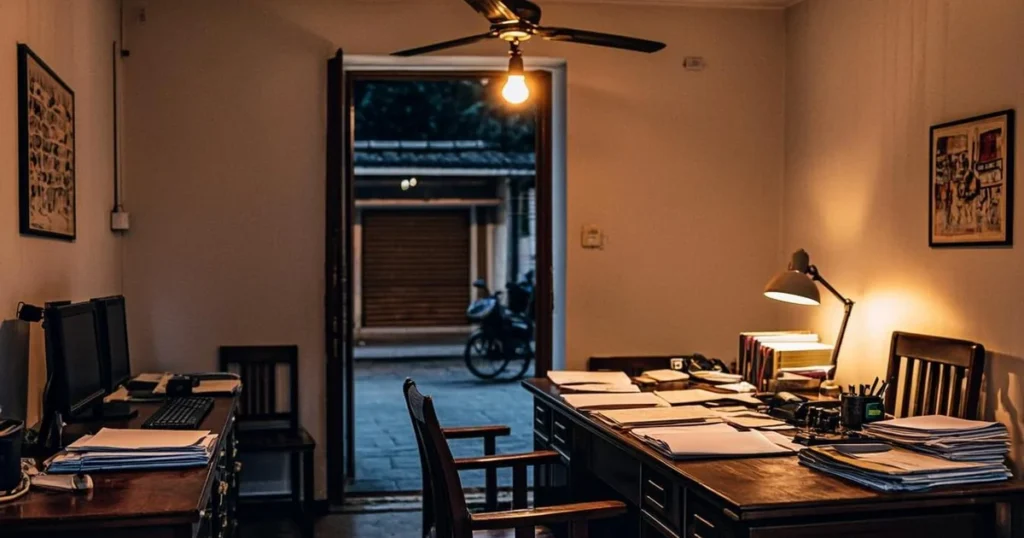
I am in my small office, but the door is open. The sound of the place drifts in. A fan turning. A radio playing somewhere two shops down. The soft beep of a barcode scanner at the grocery counter.
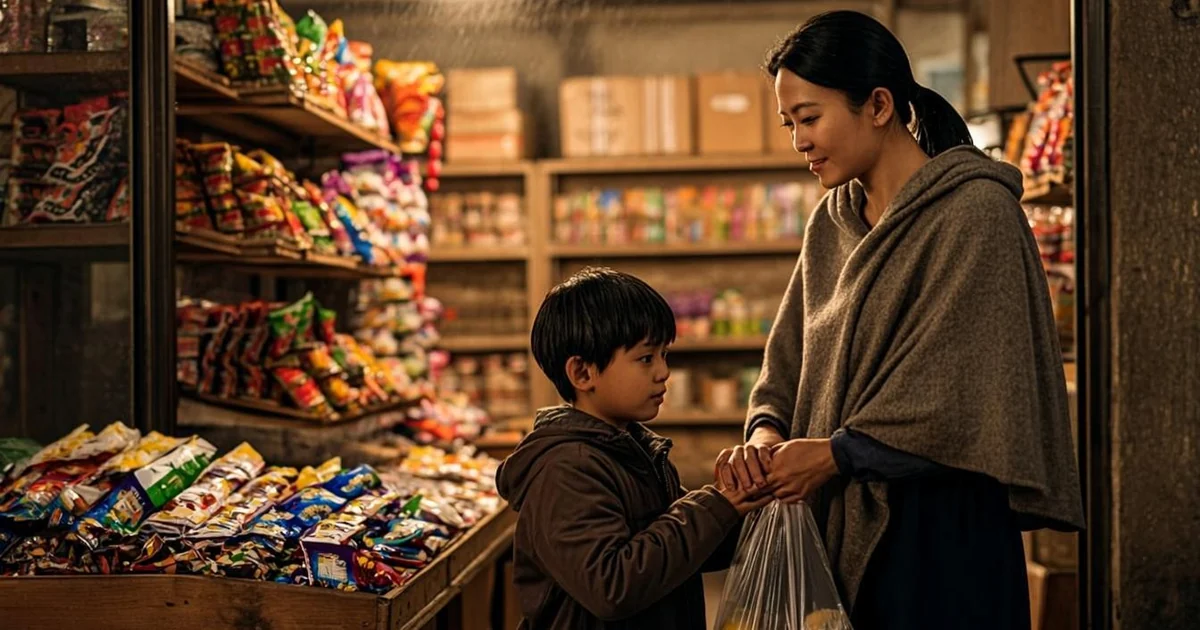
A woman walks past my door. She is holding the hand of a small boy, maybe five years old. In her other hand, a thin plastic bag with three things in it. Rice. Cooking oil. A small carton of milk.
Then she stops.
There is a stand near the entrance of the grocery store. It is full of small packets. Biscuits with cartoon faces. Bright plastic toys that cost almost nothing. Tiny chocolate bars in shiny foil.
The boy sees it before she does.
He does not say a word. He does not have to. His hand tightens around hers. His head turns. His whole small body leans toward that stand, as if some quiet magnet is pulling him.
The mother looks down. She looks at the stand. She looks back at the thin bag in her hand. Three things in it. Three things she came for.
She pauses for less than three seconds. But I have been watching this moment for years, and I know what those three seconds hold.
Then she picks up one small packet of biscuits. She puts it on the counter beside the rice. The boy does not smile. He just lets out a long, slow breath, like a man who has been holding it for an hour.
The packet costs less than a dollar.
It was not on her list.
I have run the books for a marketplace with one hundred and fifty shops. I have collected rent from shopkeepers, balanced their accounts, watched their sales rise and fall with the seasons. But the thing I have done most, in all these years, is watch.
Watch people pick up an item. Check the price. Pause. Put it back.
Watch a man come in for a packet of razor blades and walk out with three bags of things he did not know he wanted.
Watch a young couple stand in front of a television set for forty minutes, touch the screen, sit on the floor in front of it, whisper to each other, leave, come back the next day, and leave again without buying it.
I used to think buying was simple. You need something. You go and buy it. You go home.
I do not think that anymore.
Most of what we buy has nothing to do with need. And most of us, if we are honest, already know that. We just do not know why we keep doing it.
This article is my attempt to explain what I have seen. Not from a textbook. From the floor.
What Impulse Buying Really Means
Let us start with the word.
An impulse buy is a purchase you did not plan. You did not write it on a list. You did not save up for it. You did not compare prices. You saw it. You wanted it. You bought it. Sometimes in less time than it takes to read this sentence.
Researchers who study this sort of thing have a way of putting it. They call it “an unplanned purchase driven by emotion rather than logic1” . I would say it more simply. It is when your hand reaches for your wallet before your mind finishes its question.
And it is not rare. It is the rule, not the exception.
A 2025 analysis by Capital One Shopping pulled together years of consumer surveys. The numbers are worth sitting with for a moment. Ninety-two percent of shoppers have bought something on impulse at some point. Fifty-four percent have spent a hundred dollars or more on a single impulse buy. And about thirty-six percent of Americans say most of what they buy is unplanned 2.
Thirty-six percent. Read that again. More than one in three people say most of their purchases were not planned.
The same research found that the average consumer spent about $254 a month on impulse buys in 2025. That is roughly $3,045 in a year[2]. For some readers, that is a month of groceries. For others, it is a school fee. For a few, it is the difference between making rent and not making rent.
Online, the story gets sharper. Invesp, a research firm that studies e-commerce, reports that impulse purchases account for nearly forty percent of all online spending3 [3]. Forty percent. Of every dollar spent on the internet, forty cents was not on the list.
Here is what I want you to understand before we go further.
These numbers are not a verdict on you. They are a description of all of us.
If you have ever bought something and wondered, an hour later, why you did it, you are not weak. You are human. And you are in very large, very ordinary company.
What a Hundred Dollars a Month Becomes
Let me show you something I learned in commerce school, but understood only later, standing in a real marketplace.
Two hundred and fifty-four dollars a month. That is the average. Some months it is less. Some months it is much more. Let us stay with the average, just to see what it does.
In one year, that is $3,045.
In five years, that is $15,225.
In ten years, not counting any interest, that is $30,450.
If impulse buying is part of why you are still short at month’s end, read how to stop living paycheck to paycheck for the full plan, not just the spending piece.
Now, that money is gone. It bought things. Some of those things were useful. Some brought a moment of real joy. Most were forgotten within a month. A few were forgotten by the time you reached the parking lot.
I am not saying this to make you feel guilty. I am saying it because I have stood with shopkeepers who, at the end of a hard month, sit with a calculator and try to find the money that went somewhere. The sale was made. The customer walked out happy. But the shopkeeper’s own numbers do not balance. And the reason is always the same. Small leaks. Many small leaks. Over many months.
Personal money works the same way. The big losses are easy to see. It is the small, daily, unplanned ones that quietly drain the tank.
A 2023 Bankrate survey found that forty-eight percent of social media users have impulsively bought something they saw online 4. Forty-eight percent. Almost half. The screen in your pocket is a shop that never closes. It does not even have a door to walk out of. It just keeps whispering.
What I Saw in the Marketplace
I want to tell you about three people. None of them know I noticed them. I will change small details, but the moments are real. They are the kind of moments I see every week.
The Man Who Came for Milk
He walked in at six in the evening. I know because the office clock had just struck. He told the grocer he needed one liter of milk. That was all.
He came out thirty-five minutes later with three bags.

I watched him load the bags into his motorcycle. He paused. He looked at one of the bags. He sat on the bike for almost a full minute without starting it.
I do not know what he was thinking. I do not need to know.
I know that look. I have seen it on enough faces. It is the look of a man who has just realized that the milk cost him a lot more than milk.
The Father and the Two Boxes
A father stood in front of a shelf of shoes. His son, maybe eleven, stood beside him. The son wanted the more expensive pair. You could see it in his whole body. The way he kept picking that one up. Turning it. Putting it back down. Picking it up again.
The father looked at the price. Then he looked at the cheaper pair. Then he looked at his son.
He did not say much. “We will see,” he said. The two words parents say when they do not want to say yes and do not know how to say no.
He put the cheaper pair in the basket. His son’s face did not change. But something behind his son’s face did.
I have been that boy. I have also been that father. The decision was not really about shoes. It was about something else. And the store, whether it meant to or not, was right there in the middle of it.
The Woman Who Left Empty-Handed
She tried on a shawl. A nice one. She looked at herself in the mirror for a long time. She turned. She smiled a small, private smile. The kind of smile that is between a person and the glass.
Then she looked at the price tag.
She put it back on the rack. Very gently. As if she did not want to wrinkle it.
She walked out with nothing.
I watched her go. I wanted to walk after her and tell her something. I did not, of course. It is not my place.
But if I could have, I would have said this. The shawl was not the problem. The walking away was not a failure. The decision she made in those ten seconds was the smartest financial decision she made all week.
Most people do not see that. They see what was not bought. I have learned to see what was not lost.
Why the Brain Buys Before the Mind Catches Up
I am not a scientist. I am a shopkeeper who reads. But I have spent enough years watching people buy that when I finally read what researchers have found, I recognized every one of their findings on the faces of my customers.
Three ideas, in particular, explained almost everything I had seen.
The Dopamine Trick
Most people think shopping feels good because of the thing you buy. The new phone. The new shirt. The new bag.
Research says something stranger.
A 2015 article in Psychology Today, drawing on years of brain research, explained that the brain releases a chemical called dopamine not when you receive a reward, but when you expect one5. The anticipation, the wanting, the almost-having, is what feels good. Not the having.
Dopamine, in other words, is the chemical of reaching. Not of holding.
This is why the moment before you click “buy” feels electric. And why the thing itself, once it arrives, often feels flat. The chemical high was for the chase. The chase ended. The package is just a package.
I have watched this in our marketplace. The customer who holds a product for thirty seconds, eyes bright, breath held, is in a kind of trance. The same customer, two minutes after paying, often looks like someone waking up from a dream they cannot quite remember.
It is not weakness. It is biology. And biology can be slow to argue with.
The Pain of Paying
In 2007, a team of researchers at Carnegie Mellon University, led by Professor George Loewenstein, ran a now-famous experiment. They gave twenty-six adults twenty dollars each to spend on products. The twist was that the participants made their decisions while lying inside a functional magnetic resonance imaging scanner, a machine that shows which parts of the brain are active 6.
The researchers watched the brain light up as people decided what to buy. And they found something that has changed how we think about money ever since.
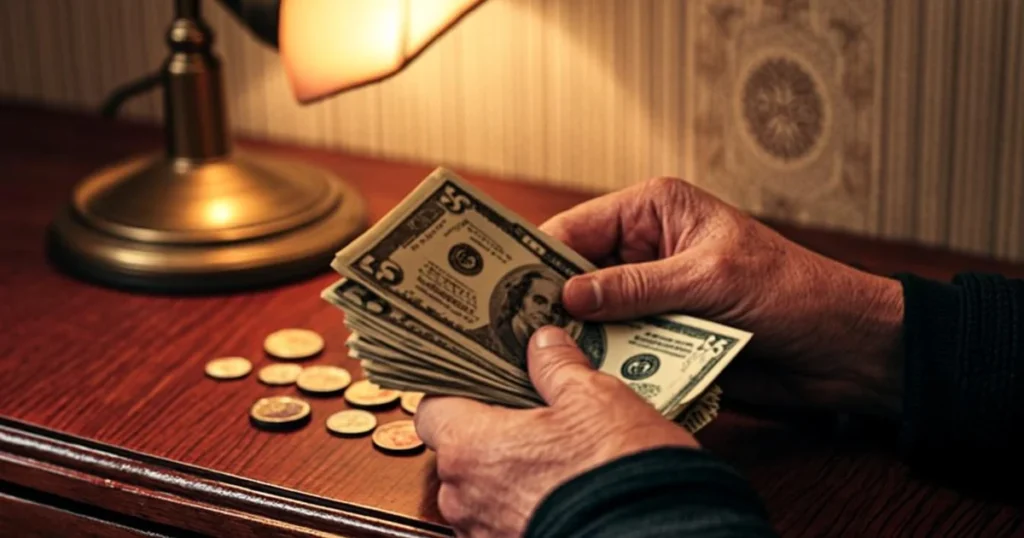
When people paid with cash, the parts of the brain that process pain became more active. When they paid with a credit card, that pain was far smaller. The card, in Loewenstein’s words, “effectively anesthetizes the pain of paying” [6].
Let me say that in plain words. Handing over bills feels like losing something. Swiping a piece of plastic does not.
I grew up counting coins. I knew this long before I read it. The feel of money leaving your hand is heavy. The beep of a card reader is nothing.
Stores know this too. They do not need to read Loewenstein. They have known it for decades. This is why almost every store, online or off, will try to make payment as invisible as possible. One click. Saved card. Buy now, pay later. Tap your phone. The less you feel it, the more you spend.
And if the painless swipes have already turned into debt you cannot pay, the next question is how to get out. Read how to get out of credit card debt when you feel trapped.
Mental Accounting: The Labels We Put on Money
In 1999, an economist named Richard Thaler published a paper on something he called mental accounting. The idea was simple, and it changed a field. Six years later, in 2017, Thaler won the Nobel Prize in Economic Sciences for this work and the broader ideas it grew into7 .
Here is what Thaler noticed.
People do not treat all money the same. They put mental labels on it. Salary money feels heavy. Bonus money feels lighter. Tax refund money feels almost like a gift. Found money, like a twenty-dollar bill on the sidewalk, feels lighter still.
The bills are the same. The numbers are the same. But the mental label changes how easily we let them go.
I have seen this in our marketplace. A shopkeeper will agonize over a fifty-rupee expense from his daily takings, and then spend five hundred rupees that same evening from a small bonus he received, without thinking twice. Same man. Same money. Different label in his head.
This is not a flaw. It is how humans are built. But once you know it, you start to hear the labels. And once you hear them, you can ask a question that saves you a lot of money over a lifetime.
The question is this. Would I buy this if the money felt like my salary? Or does it only feel easy because I have labeled it as something else?
The Store Is Not Your Friend (And It Is Not Your Enemy Either)
I want to be careful here. I work in a marketplace. I know shopkeepers. Many of them are my friends. Stores are not trying to harm you. They are trying to stay alive. Selling is how they feed their families, the same way your salary feeds yours.
But I also want to be honest. Stores are designed. Every part of them. And the design is not on your side, the same way a chessboard is not on the side of the pieces.
Roger Dooley, in his book on neuromarketing, cites research suggesting that only about five percent of our buying decisions are made consciously8. Five percent. The other ninety-five percent happens below the surface, where the lights and the smells and the music and the layout do their work without asking us.
Let me list a few things stores do, so you can recognize them when you see them. None of these are secrets. All of them are real.
The Entrance Is a Trap (in a Quiet Way)
The first ten meters inside most stores are designed to slow you down. Bright colors. Seasonal displays. Things you did not come for, placed where you cannot miss them. The store is not rude about this. It is gentle. But the gentleness is the design.
The Smell and the Sound
Retail designers have studied this for decades. Lavender is said to relax shoppers. Citrus is said to energize them. Up-tempo music makes people walk a little faster, which can mean buying more in less time. Slower music, in some settings, makes people linger longer and spend more9. None of this is magic. It is craft. And it works on you whether you notice it or not.
The Things You Can Touch
There is a famous example in retail circles. Apple stores reportedly keep their laptop screens tilted to about seventy degrees. Not so you can read them. So that you will reach out and fix the angle yourself. The moment you touch the product, you begin to feel a small ownership of it. And once you feel ownership, you are more likely to buy [9].
I am not telling you this so you stop going to stores. I am telling you so that when you reach for something, you can ask yourself a simple question. Did I want this before I walked in? Or did the store help me want it?
There is no shame in being moved by these things. The same brain that falls for a clever store layout is the brain that fell in love with your spouse, that remembers your mother’s voice, that knows the smell of your childhood kitchen. It is not a stupid brain. It is a feeling brain. The trick is not to stop feeling. The trick is to know what you are feeling, and to give yourself a moment before the feeling decides for you.
How to Slow Down the Want
I promised I would not give you rules. I will not. Rules fail the moment life gets hard. What I will give you instead are three small moves. I did not invent any of them. They come from researchers, from banks, from consumer protection agencies. I have tried all three myself. They work not because they are clever, but because they are simple.
Move One: The Twenty-Four Hour Pause
This is the one I would give you if I could only give you one.
When you see something you want, and you did not plan to buy it, do not buy it. Not yet. Walk away. Go home. Sleep on it. Come back tomorrow if you still want it.
American Express, Bankrate, and several credit unions all recommend this rule 10. The exact number of hours varies. Some say twenty-four. Some say forty-eight. I have even seen seventy-two.
The number matters less than the idea. Most wants do not survive the night. They are bright at six in the evening and faint by morning. The thing that felt necessary in the store feels like a stranger the next day.
I have tested this on myself for years. I would say that, for me, eight out of ten impulse wants disappear by morning. The other two? Sometimes I go back and buy them. And often, those two were things I actually needed. The pause does not kill real needs. It only kills the false ones.
Move Two: Pay With Cash When It Matters
Remember Loewenstein and his scanner. Paying with cash hurts. Paying with a card does not.
So when you are about to spend money on something you did not plan to buy, take out cash. Count it out. Hand it over. Watch it leave your hand.
If that feels heavy, that is the point. The weight is information. It is your brain telling you something. You do not have to obey the weight. But you should hear it before you decide.
I do my own spending this way for anything above a small amount. It is not because I do not trust cards. It is because I trust myself more when I can feel the money moving.
Move Three: The Want List
This is the one that helped me most.
Keep a small list. On your phone. On paper. Anywhere. When you see something you want, do not buy it. Write it down. Put the name, the price, and the date.
Tell yourself you can buy it. Just not today. In thirty days, look at the list.
I have done this for years. The list is long. The things I have actually gone back to buy are very few. The list itself became the reward. The act of writing a thing down, instead of buying it, gave my brain the same small satisfaction. And it cost nothing.
When the Want Is Real (And the Pause Is Wrong)
I want to be honest about something. Not every impulse buy is a mistake.
Some of the best things I own, I bought on impulse. A book I saw in a shop in another city, that I have never found again. A small gift for my mother, on a day I had no reason to buy one. A tool I did not know I needed until I held it in my hand.
The twenty-four-hour rule would have made me miss some of those. The want list would have let them go cold.
So I want to be careful. The point of this article is not to turn you into a machine that never buys anything. The point is to help you tell the difference between a real want and a manufactured one. Between the thing your life is asking for, and the thing the store is asking for.
Sometimes they are the same. Often they are not. You are the only one who can tell, in the moment, which is which. And you can only learn to tell by practicing.
There is another thing I want to say, and I want to say it clearly.
Not all of this is your fault. Advertising follows you into your phone. Stores are designed by people who have studied the human brain for decades. Social media shows you, every day, things you did not know existed and now feel you must have. The pressure is real. The pressure is constant. And it is not fair to pretend you are losing a game that was rigged before you sat down to play.
But the move that is in your power is the pause. The pause is yours. No store can take it from you. No algorithm can rush it. The pause is the one piece of the entire machine that you still control.
And if your impulse spending has become a secret you keep from someone you love, the next step is the conversation. Read how to talk about money with the people you love.
What the Marketplace Taught Me About People
I started this article with a woman and her son. A thin bag of three things. A small packet of biscuits. A pause of less than three seconds.

I want to end with her too.
I do not know her name. I do not know if she went home and counted what she spent. I do not know if that packet of biscuits was a small kindness or a small mistake. Probably, it was a little of both. Probably, like most of what we buy, it was an answer to a question that was not really about biscuits at all.
That is what the marketplace taught me. People do not buy things. They buy feelings. They buy relief. They buy a moment of being someone they wish they were. They buy hope, in a small shiny package, and they carry it home in a thin plastic bag.
Money, when you watch it long enough, stops being numbers. It becomes a window. And through that window, you see what people are afraid of, what they love, what they are tired of, what they hope will get better if they can just bring home one more thing.
I am not a certified financial planner. I am not a chartered accountant or an investment advisor. I am a man who has spent his life watching money move, and who has come to believe that the smartest spending decision is rarely about the product. It is almost always about the pause.
Try this. For one week, when you feel the want to buy something you did not plan for, do not buy it. Walk away. Sleep on it. Write it on a list. Come back tomorrow if you still want it.
You will be surprised how many tomorrows never come. And how much money stays in your pocket, simply because you gave yourself one night.
Once that money stays in your pocket, the next step is to give it a home. Start here with how to start saving money when you feel broke.
That is not a rule. That is just a small kindness you can do for the future version of yourself. The one who will need that money for something that is not on any shelf.
The marketplace will be open again tomorrow. The lights will be on. The music will be playing. The stand by the entrance will be full of small, bright things.
And you will walk past it.
Maybe.
A Quick Note From Tehseen
I am not a certified financial planner, chartered accountant, investment advisor, or tax professional. I hold a degree in Commerce and have spent years managing business accounts and a marketplace with one hundred and fifty shops. Everything on Savvy Broke is shared for general information and education, not as personal financial advice. If you are about to make a major financial decision, please speak with a qualified professional who understands your situation.
References
Sources are listed below. Links were checked at the time of writing in September 2026.
- Invesp. (2025). The State of Impulse Buying: Statistics & Trends. “Impulse buying refers to making an unplanned purchase driven by emotion rather than logic.” Available at: https://www.invespcro.com/blog/impulse-buying ↩︎
- Capital One Shopping. (2025). Impulse Buying Statistics: Consumer Spending Habits. Reports 92% lifetime impulse buying, 36% say most purchases are unplanned, and an average of $254 per month per consumer in 2025. Available at: https://capitaloneshopping.com/research/impulse-buying-statistics ↩︎
- Invesp. (2025). The State of Impulse Buying (Statistics & Trends 2025). Reports that impulse purchases account for nearly 40% of all online spending. Available at: https://www.invespcro.com/blog/impulse-buying ↩︎
- Bankrate. (2023, September 18). Survey: 48% of social media users have impulsively bought something they saw online. Available at: https://www.bankrate.com/finance/credit-cards/social-media-impulse-purchases-survey/ ↩︎
- Vitelli, R. (2015, October 22). Shopping, Dopamine, and Anticipation. Psychology Today. “Research shows that the brain releases dopamine in anticipation of a reward.” Available at: https://www.psychologytoday.com/us/blog/media-spotlight/201510/shopping-dopamine-and-anticipation ↩︎
- Carnegie Mellon University. (2007). Spend ’Til It Hurts. Reports the Loewenstein fMRI study: 26 adults, $20 each, credit cards “anesthetize the pain of paying.” Available at: https://www.cmu.edu/homepage/practical/2007/winter/spending-til-it-hurts.shtml ↩︎
- The Royal Swedish Academy of Sciences. (2017). The Prize in Economic Sciences 2017 — Popular Science Background. Awarded to Richard H. Thaler for his contributions to behavioral economics, including the theory of mental accounting. Available at: https://www.nobelprize.org/prizes/economic-sciences/2017/popular-information/ ↩︎
- Dooley, R. (n.d.). Neuromarketing. Cited in Digital Synopsis: “only 5% of our buying decisions are made consciously.” Available at: https://digitalsynopsis.com/advertising/4-ways-retailers-manipulate-your-senses-make-you-buy/ ↩︎
- Digital Synopsis. (n.d.). How Retail Stores Use Smell, Touch, Color And Music To Make You Buy. Includes discussion of scent, music tempo, and tactile product engagement such as Apple’s screen angle convention. Available at: https://digitalsynopsis.com/advertising/4-ways-retailers-manipulate-your-senses-make-you-buy/ ↩︎
- American Express. (2024, October 3). How to Stop Impulse Buying. Recommends a 24-hour cooling-off period. See also Bankrate (2024, August 21), 5 Ways to Avoid Impulse Buying. Available at: https://www.americanexpress.com/en-us/finance/financial-literacy/how-to-stop-impulse-buying/ ↩︎


[…] you want to understand why the money keeps slipping out, read why we buy things we don’t need — a shopkeeper’s view from inside a hundred and fifty […]
[…] site were written for you. The first one was about how to start saving. The second one was about why we spend on things we do not need. Both matter. Both can move the […]
[…] your secret started with a purchase you did not plan, read why we buy things we don’t need. Understanding the want is the first step to stopping the […]